Amalfi · Since 1220
Eremo Garden
The convent's orchards, suspended between Monte Aureo and the sea
History · Nature · Silence
Eight centuries of care
for the land and the soul
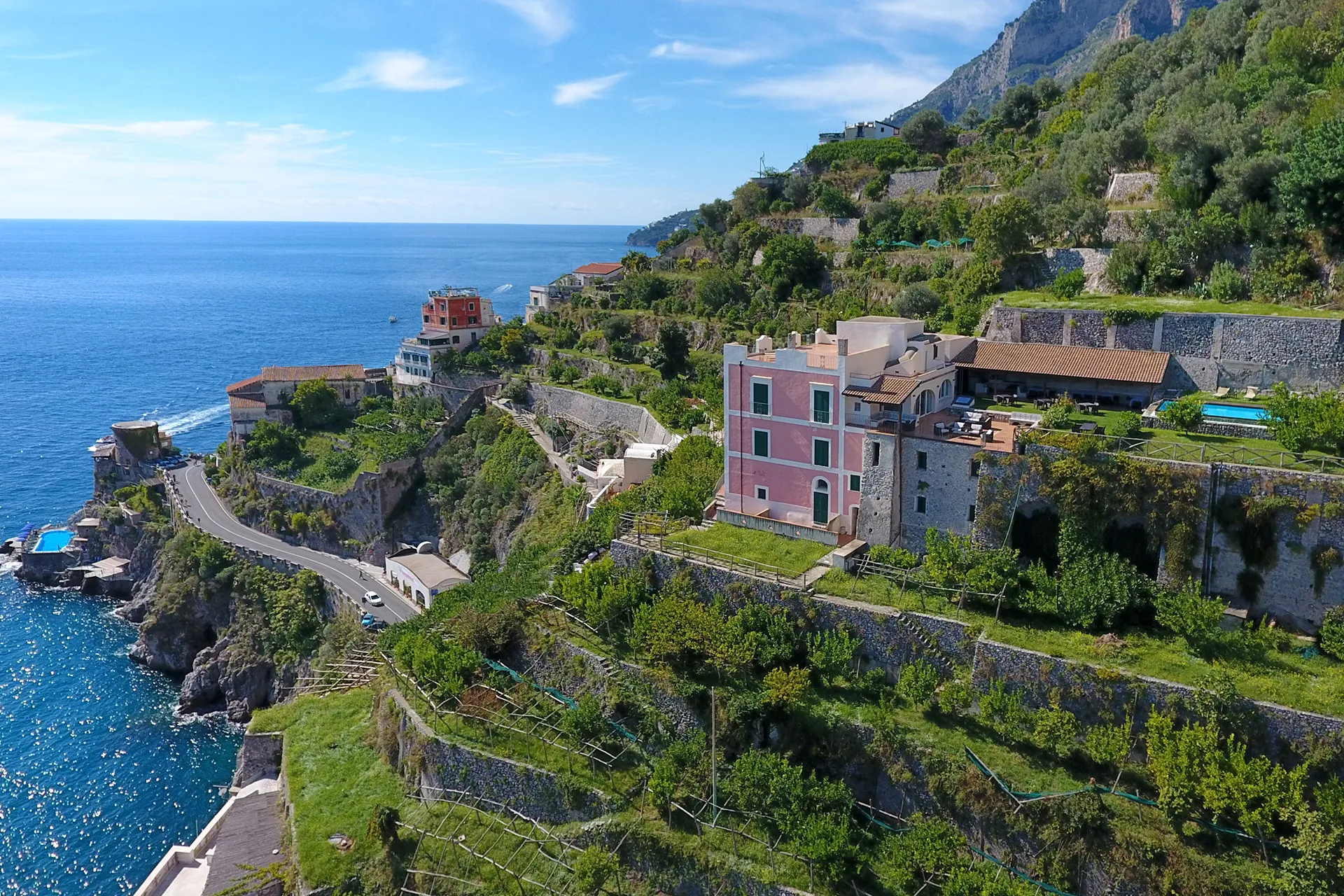
When Saint Francis of Assisi founded the convent in 1220, he brought with him not only faith, but also the Franciscan tradition of manual work and respect for nature. The orchards and terraces that still surround Hotel Luna Convento today are the living testimony of that heritage: medieval dry stone walls, fragrant lemon groves, olive trees and traces of a garden that time has not wished to erase. The Eremo Garden is this: a journey into the green soul of Amalfi.
Dry stone walls,
medieval roots
Every stone in this garden has been placed by human hands over eight centuries. A landscape built with patience, respect and the awareness that beauty only lasts if one works every day to deserve it.
The origins
The convent, the orchards
and the medieval documents
The convent of S. Maria degli Angeli — later S. Francesco, founded according to tradition in 1220 by the Saint of Assisi, and then becoming Auberge de la Lune and finally Albergo Luna — possessed gardens and cultivated terraces in its immediate surroundings from its very origins. First of all, a walnut tree was planted in the kitchen garden that still flanks the convent building today: a symbolic plant for the Franciscans, linked to simple life and the nourishment of the soul.
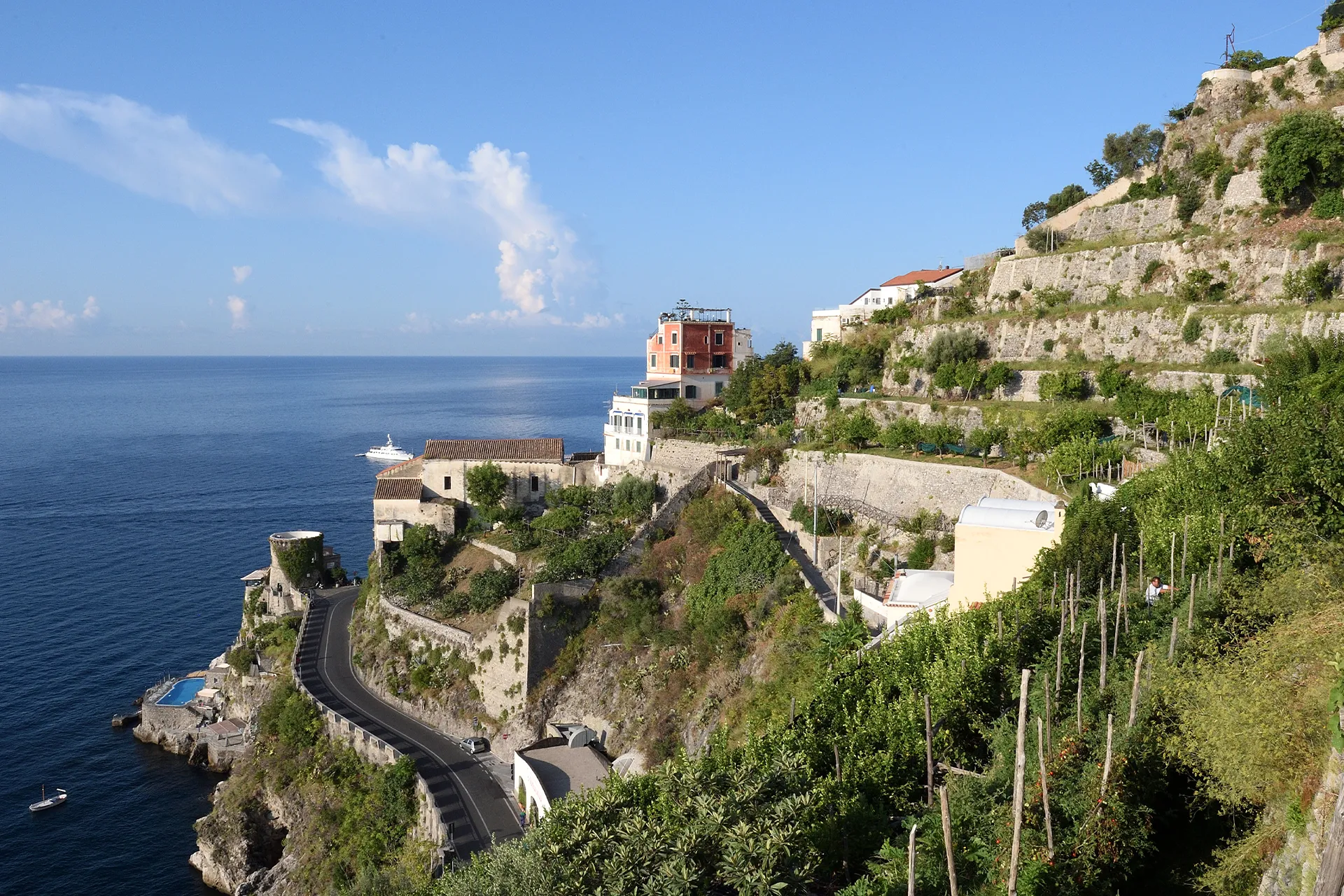
The nearby terraces date back to the Middle Ages and consist of macerine, built using dry stone walls, partly restored with masonry during the Bourbon era. In medieval documents they are referred to as horti, each made up of several cultivated terraces called petie.
These terraces were even planted in narrow spaces clinging to the rock on the slopes of Monte Aureo: in such cases they were called viterine. A medieval vocabulary that tells of a civilisation capable of transforming the most hostile rock into a flourishing garden.
"All this is attested by notarial sources covering a period from the 13th to the 19th century. A historical heritage of extraordinary continuity, testimony to how the care of the land and the contemplative life were, for centuries, two sides of the same vocation."
What grows here
The fruits of eight centuries of cultivation
The lemon groves
From the 19th century onwards, the medieval vineyards were gradually replaced by lemon groves, certainly more profitable and more easily traded. The sfusato lemon of Amalfi — a Slow Food Presidium, with a thick and wonderfully fragrant skin, almost seedless — is today the symbolic fruit of this land. Our lemon groves grow on the same terraces where grape clusters ripened for centuries, and their scent mingles every morning with the sea air rising from the gulf.
Olive trees and vines
Medieval tradition had vineyards directly connected to olive groves: two complementary crops that ensured the sustenance of the convent and its inhabitants. Documents attest to the production of both wine and table grapes. Some of the century-old olive trees of the Eremo Garden are still there, silent witnesses to a continuity that no other garden on the Coast can boast. Among their branches, in autumn, the fruit is still harvested.
The ancient kitchen garden
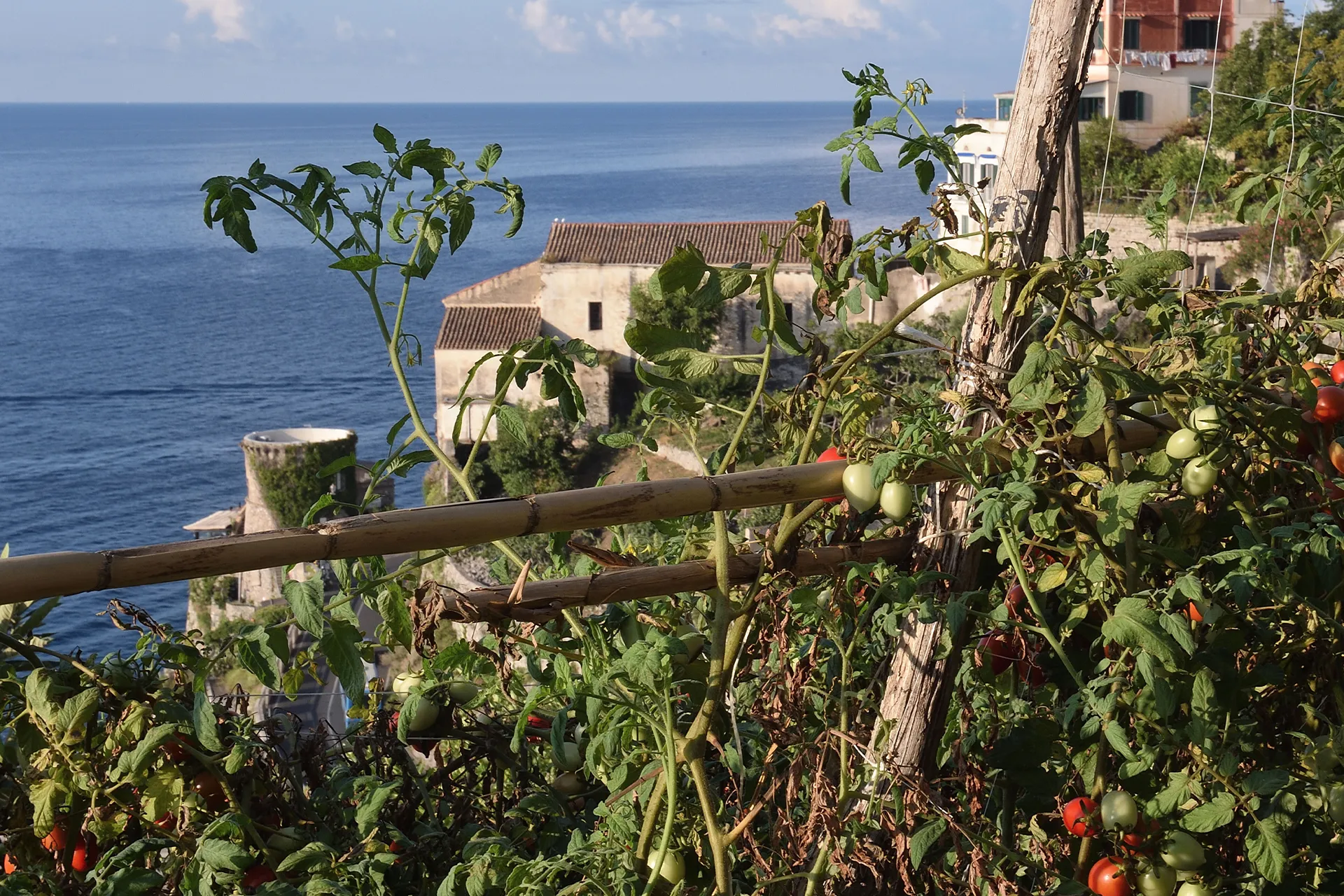
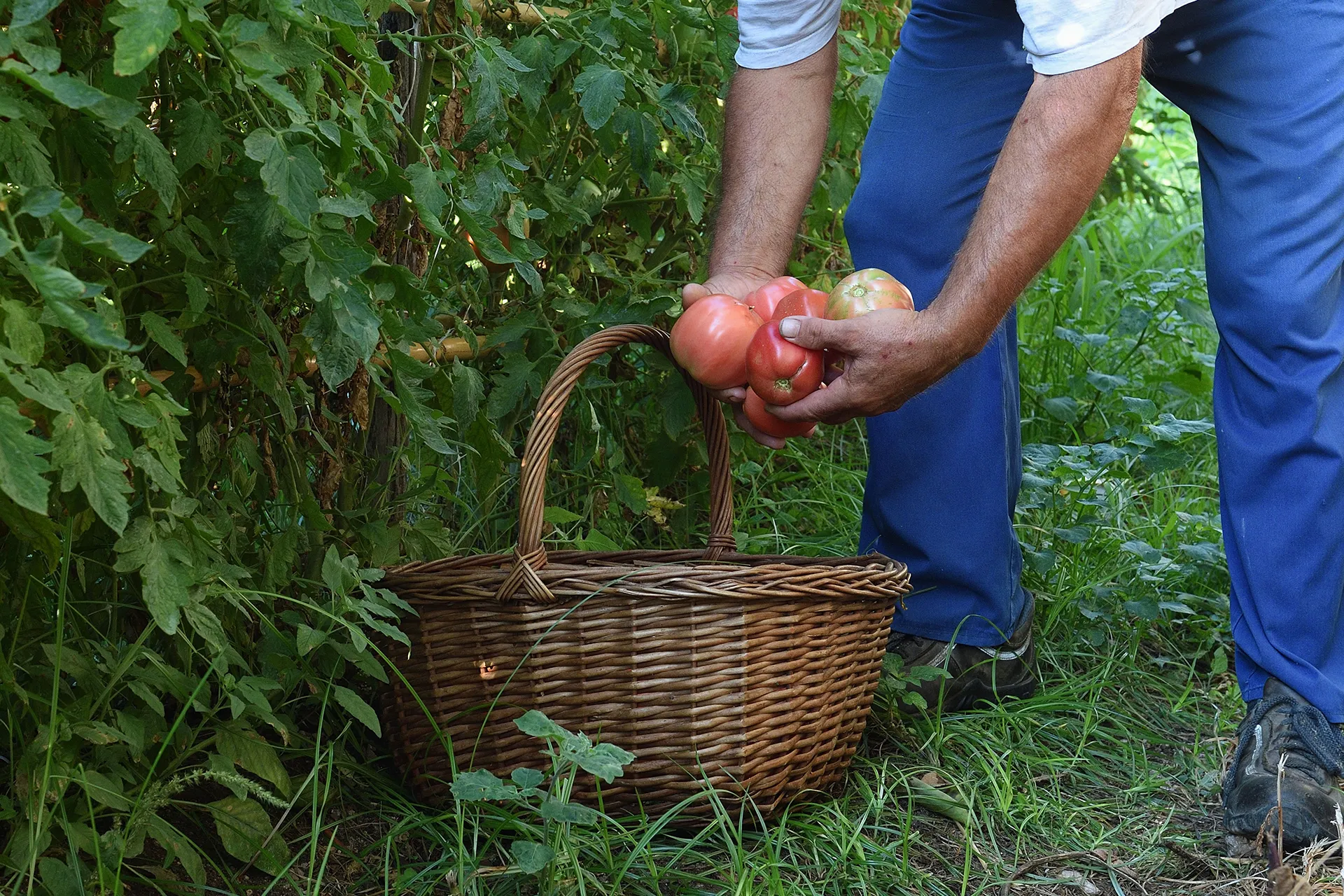
The lower part of the gardens was reserved — as notarial documents attest — for lettuce (folea), onions and gourds (cocorbete). There was no shortage of apricot trees (gresommole), figs, plums and hazelnuts. A surprising biodiversity for a medieval garden, the fruit of the Franciscan tradition that saw the work of the land as an act of prayer and the garden as a mirror of divine order.
"The walnut tree planted by the Franciscans is still there, next to the convent building. A long-lived, slow-growing tree, symbol of wisdom and rootedness: no plant could better represent what this place has wanted to be for eight centuries."
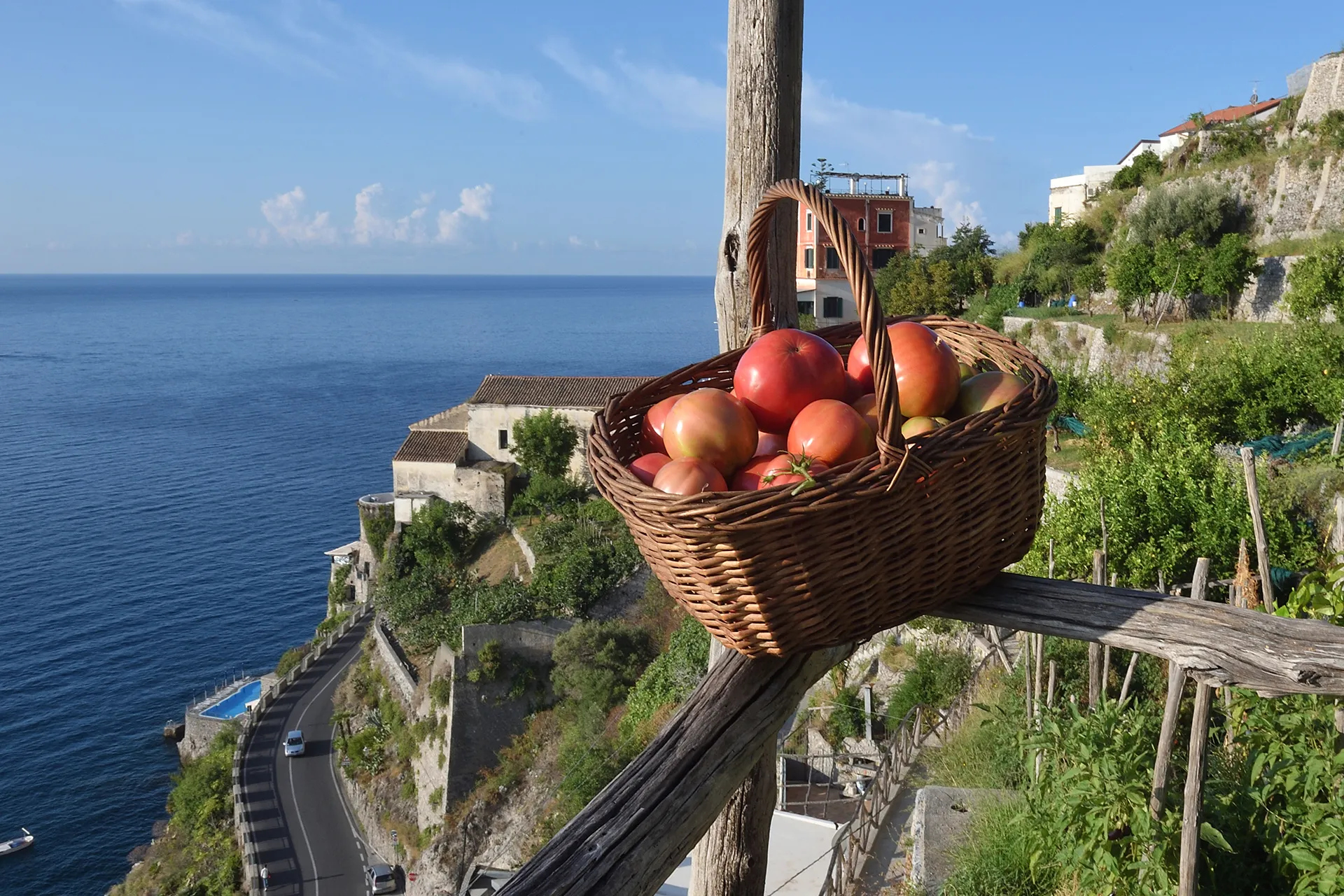
"Walking among the terraces of the Eremo Garden at sunset, with Monte Aureo behind you and the sea of Amalfi in front, is like reading all the centuries of this place at once. The stone, the scent of lemons, the silence: three things that have always belonged here."
Today
A garden to live in,
not only to admire
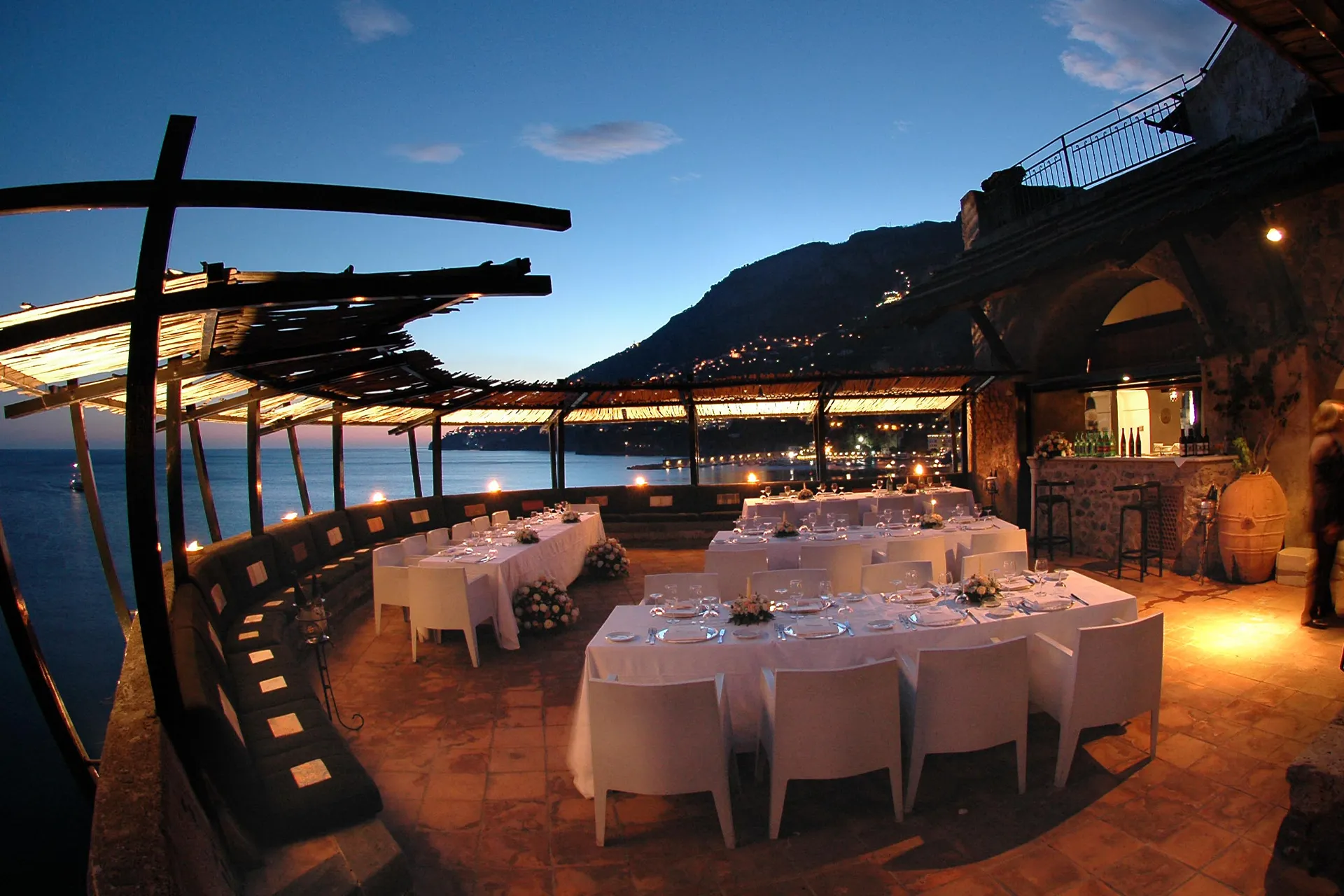
The Eremo Garden is not an open-air museum, nor a backdrop for photographs. It is a living place, cultivated and cared for with the same techniques passed down for centuries, which guests of Hotel Luna Convento can visit, walk through and inhabit. A stroll among the terraces at dawn — when the light of the Tyrrhenian is still pink and the air smells of dew and lemon — is worth as much as a night in a room.
The garden's fruit goes directly into the kitchen: lemons from the home lemon grove end up in our granite, risottos and fish marinades. The aromatic herbs cultivated in the medieval kitchen garden flavour our sunset cocktails. The circle closes, as it always has here, between the land and the table.
Visit the garden
The Eremo Garden awaits you
- AccessHotel guests only
- SeasonAll year round
- Hours07:00 – 21:00
Stay with us
Eight centuries of history
await you
The Eremo Garden is one of the best-kept secrets of the Amalfi Coast. To truly experience it, you need to stay at least one night: at dawn the garden is completely different from sunset, and no photograph does justice to what you feel walking among the lemon groves as the sunlight begins to colour Monte Aureo.
Book your stay